Fake Deals, Real Money: How to Tell if That 'Sale' Price at a Canadian Store is Actually a Rip-Off
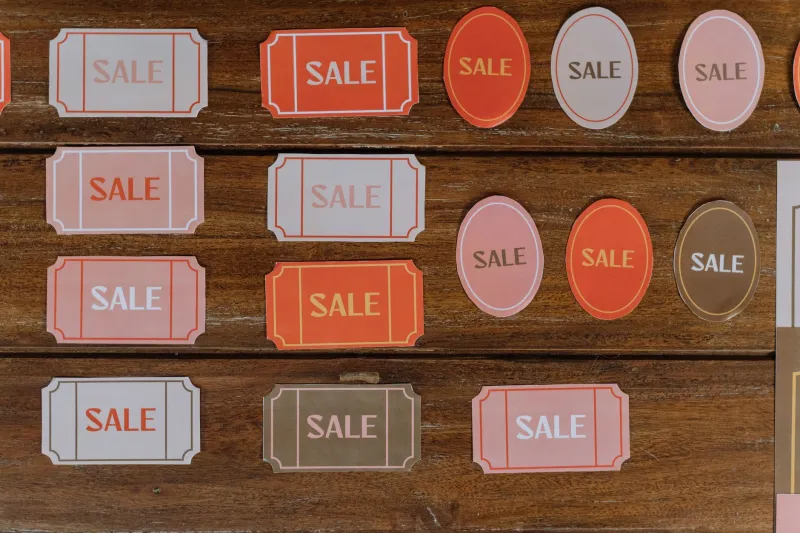
Picture this: you're standing in the aisle of a major Canadian retailer, staring at a tag that reads "Was $149.99 — Now $79.99!" Your brain lights up. Fifty bucks off? That's a serious deal. You toss it in your cart without a second thought.
But here's the uncomfortable question nobody asks at the checkout: was it ever actually $149.99?
The short answer, more often than you'd like, is no. Welcome to the hidden markup game — a pricing strategy that's been quietly frustrating Canadian shoppers for years, and one that's worth understanding before your next big purchase.
The Anatomy of a Fake Sale
Retailers aren't necessarily lying outright — but they're not exactly being straight with you either. The tactic is sometimes called "anchor pricing" or "was/is pricing." Here's how it works:
A store lists a product at an inflated "regular" price — say, $149.99 — for a brief window of time (sometimes just a few days, sometimes only on paper). Then they drop it to $79.99 and slap a bright sale sticker on it. Technically, the item was priced at $149.99. Legally, the box is checked. But in practice, no reasonable shopper was ever expected to pay that number.
This isn't a fringe tactic. Canada's Competition Bureau has investigated retailers for misleading pricing, and the practice is far more common in furniture, electronics, clothing, and home goods than most people realize. A few years back, major Canadian chains faced scrutiny for exactly this kind of pricing theatre.
Why It Works So Well on Us
The psychology behind anchor pricing is well-documented. When your brain sees a high "original" price, it uses that number as a reference point — an anchor — for evaluating the deal. Even if the sale price is perfectly ordinary, it feels like a win because of the contrast.
Retailers know this. That's why those red "SAVE" stickers are so large, and why the crossed-out original price is always prominently displayed. It's not information — it's theatre.
And it works. Studies consistently show that shoppers rate identical products as better value when they're shown alongside a higher reference price, even when they intellectually understand the tactic. Knowing the trick doesn't fully protect you from it.
Your Best Defence: Price Tracking Tools
The single most effective thing a Canadian shopper can do is stop trusting the tag and start trusting the data. Fortunately, there are some genuinely useful tools for this.
CamelCamelCamel
This free tool tracks the price history of products on Amazon.ca. Before you buy anything on Amazon, paste the product URL into CamelCamelCamel and you'll see a full price history graph. If that "sale" price has been the regular price for the last eight months, you'll know immediately.
Honey (Browser Extension)
Honey, now owned by PayPal, automatically applies coupon codes at checkout and also shows you a price history for many products. It works across a wide range of Canadian retailers and is completely free to install on Chrome or Firefox.
Google Shopping
A quick Google Shopping search for any product will often surface prices from multiple Canadian retailers side by side. This is especially handy for electronics, appliances, and name-brand items where you can compare across Best Buy, Costco, Walmart Canada, and others in seconds.
Rakuten Canada
Beyond cashback, Rakuten's platform often surfaces historical pricing context and helps you spot when a deal is genuinely competitive versus when it's dressed up in sale clothing.
Red Flags to Watch For In-Store and Online
Even without a tool in hand, there are patterns that should make you pause:
- "Compare at" or "Valued at" language — These phrases are a tip-off that the reference price may not reflect what the item actually sold for at that store. It might be a manufacturer's suggested retail price (MSRP), which nobody ever pays.
- Permanent sale sections — If a store's clearance rack always has the same stuff at "60% off," ask yourself: 60% off what, exactly?
- Round-number original prices — A suspiciously clean "Was $200" followed by "Now $99" deserves a second look. Real pricing tends to be messier.
- New product, instant sale — If an item just launched and it's already "on sale," that original price may have existed for all of 48 hours.
- Online flash sales on items with no price history — If you can't verify what the item cost before the sale started, treat the "savings" claim with healthy scepticism.
What Canadian Consumer Protection Actually Says
Canada's Competition Act does have provisions around misleading advertising, including deceptive pricing. Under the law, a retailer claiming a product was sold at a higher price needs to have genuinely offered it at that price for a meaningful period. The Competition Bureau defines this loosely, but the intent is clear: you can't just invent a fake high price and call it a sale.
The problem is enforcement. Complaints can be filed with the Competition Bureau, but individual cases rarely get traction unless there's a pattern or significant public harm. As a shopper, your best protection is your own research — not waiting for regulators to step in.
If you genuinely believe a retailer is misleading you with pricing, you can:
- File a complaint at competitionbureau.gc.ca
- Report it to your provincial consumer protection office
- Leave a detailed, factual review online that helps other shoppers
Building Your Pre-Purchase Routine
Here's a simple habit that takes about three minutes and can save you real money:
- Find the product online before heading to the store (or before clicking "Add to Cart").
- Run it through CamelCamelCamel if it's on Amazon.ca, or do a quick Google Shopping search.
- Check one or two competing retailers — if everyone has the same "sale" price, that's probably just the market price.
- Look at the price history if a tool surfaces it. Has it been lower? Has this "sale" been running for six months?
- Ask yourself: would I still buy this at the sale price if there were no crossed-out number above it?
That last question is the most honest one. Strip away the anchor, and evaluate the price on its own merits.
The Bottom Line
Not every sale is a scam, and not every retailer is playing games with your wallet. Plenty of genuine markdowns happen every week across Canada — and finding those is exactly what we're here for at iCanada Deals. But a healthy dose of scepticism, paired with the right tools, means you'll never have to guess whether you're getting a real deal or a well-designed illusion.
The markup game only works when shoppers don't know it's being played. Now you do.